Clothing seems to change once you enter a relationship. It isn’t just your wardrobe anymore.
In some ways, it becomes “our wardrobe.”
That doesn’t mean you have to share clothes.
Although you can.
But it does mean your clothes start participating in someone else’s story too.
Couples become a visual unit
Whether we like it or not, couples are often perceived together.
You often hear comments like “They look good together.”
Or “They’re seem mismatched.”
Two individuals gradually become one visual composition.
Then assumptions are made.
That doesn’t mean it’s fair or even accurate, but it seems to be how people naturally perceive couples.
People often joke that couples begin looking alike after enough years together.
The blending doesn’t stop with clothing.
Speech patterns, mannerisms, and humor start to merge.
Even the pace at which they walk.
Living together seems to smooth some of the edges between two people.
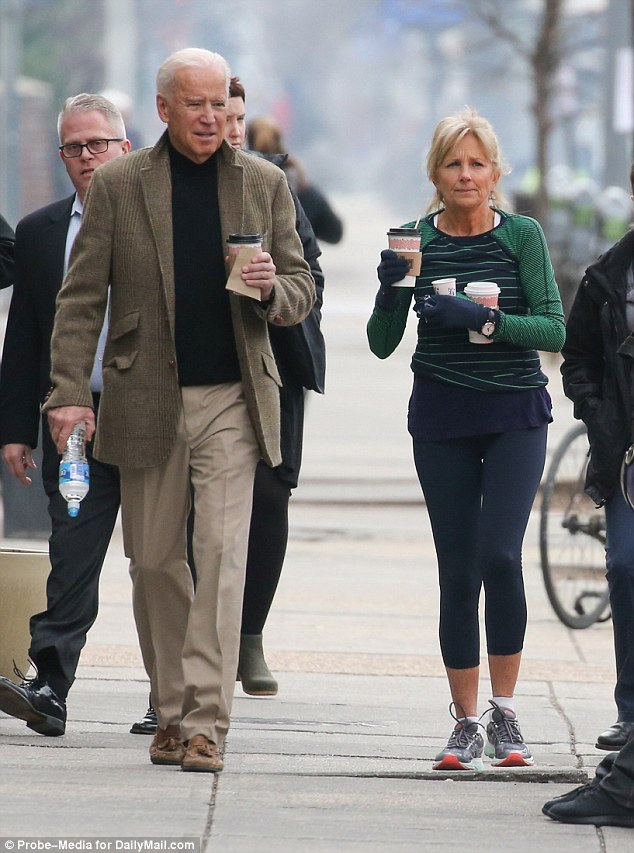
I remember when a photograph of Joe and Jill Biden grabbing coffee was circulating online. Someone commented that they looked aesthetically out of sync.
What followed was an interesting discussion about whether partners have an obligation to match each other’s level of dress.
What stood out to me wasn’t whether the criticism was justified.
It was how quickly everyone assumed they had enough information.
Maybe she had been exercising and he decided to meet her afterward.
Maybe they were heading to different places after grabbing coffee.
Hard to know.
But the context disappeared.
Only the visual contrast remained.
That contrast became the story.
When one partner changes
If you’ve been in a long-term relationship, you’ll recognize that it gradually settles into a natural baseline.
Then at some point, someone decides to change it.
I once read a Reddit post from a young man who became interested in Ivy style.
His wife wasn’t thrilled.
The comments immediately split into two camps: “Ignore her.” or “She needs to step her game up.”
I understood both reactions.
Changing your wardrobe isn’t always just changing clothes. Sometimes you’re changing the version of yourself your partner has grown accustomed to.
I don’t think the wife necessarily disliked repp ties and loafers. I do remember he received some peer feedback about dressing like an “old man”.
That might be another issue altogether.
But the main issue was she suddenly felt underdressed standing next to him.
The relative contrast had changed.
She didn’t change but he did.
The anxiety was probably less about his clothes and more about what standing next to him seemed to say about her.
Dressing your partner
Over the years I’ve noticed another pattern.
Many women eventually become interested in dressing the men in their lives.
Sometimes it’s playful and genuinely collaborative. Other times it starts feeling more like a renovation project.
I’m not entirely sure how much of this is personality or cultural.
Women are generally encouraged to think about appearance, presentation, and identity much earlier than men are.
If your own appearance feels central to your identity, it’s not surprising your partner’s appearance gradually becomes part of the picture too.
I remember during one holiday season, I overheard a relative encouraging her husband to dress up before a casual dinner at home.
“Can you put on a nicer shirt?” was how the request was phrased.
The husband looked mildly annoyed and did not comply.
Which made sense to me because our family never really dressed up for those events.
Changing his shirt wasn’t going to improve the evening.
If anything, he’d probably become the most formally dressed person there.
That wasn’t really about context.
It felt more like projecting an image.
Interestingly, not everyone resists this dynamic.
Years ago I went on a date with a man who joked that he couldn’t wait for his future wife to buy his clothes.
He liked the idea of saying, “My wife picked this out.”
He was already dressed well on the date so I assume he dressed himself.
But he didn’t want to think about clothing anymore.
Some people genuinely want that responsibility outsourced.
Identity management
Most of the time, I don’t believe partners are simply asking, “Can you wear loafers instead of sneakers?”
They’re often asking,
Can you help maintain the version of us I have in my head?
Sometimes that’s a version of the relationship that used to exist.
Other times it’s an imagined one, shaped by comparisons, ideals, or what a couple is “supposed” to look like.
Which creates another audience.
Another perspective to consider.
Another interpretation to manage.
This is different from social calibration.
“The restaurant is fairly formal. You’ll probably want a jacket,” is simply helping someone navigate the context.
However, comments like “Can you dress like a grown-up for once?”, go beyond the context.
We are no longer talking about the restaurant.
One thing relationships seem to do is expand your audience.
When you’re single, the imagined observer is fairly abstract.
Coworkers, family or friends and some online strangers.
Once you’re partnered though, someone else’s opinion naturally carries more weight.
That isn’t inherently unhealthy. It often reflects increased intimacy.
The challenge is making sure your partner becomes part of the conversation, not the entire conversation.
Otherwise, you slowly stop getting dressed with them and start getting dressed for them.