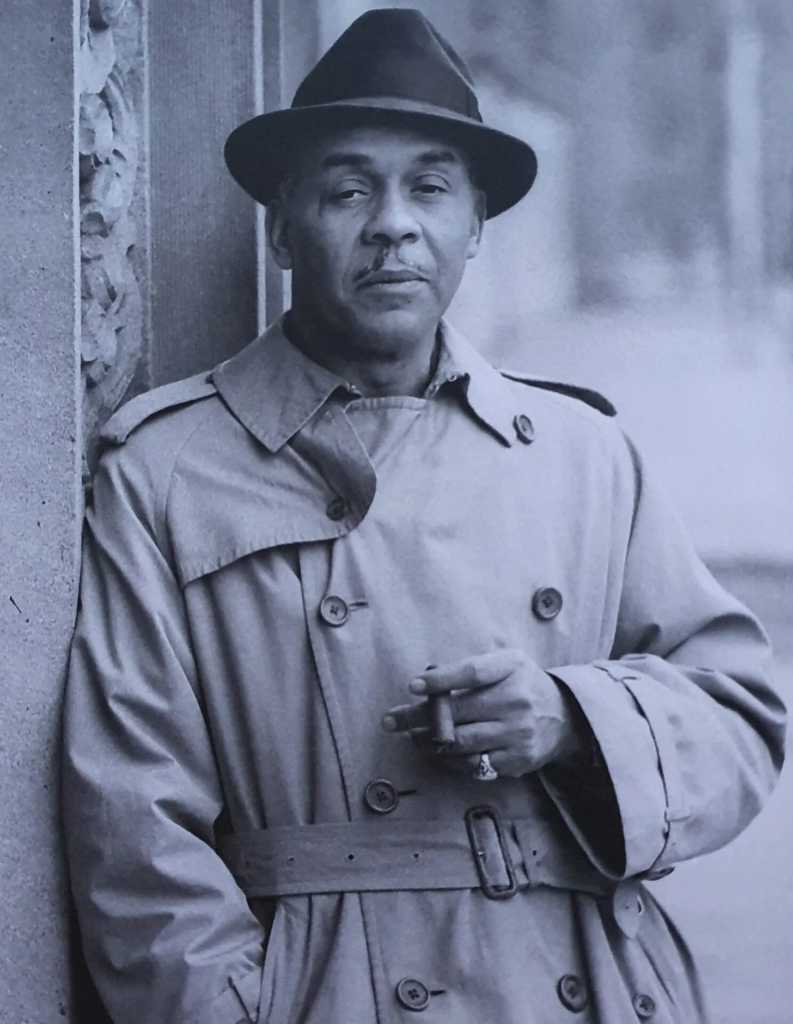
In addition to decluttering clothes , I got rid of many style books.
One book I couldn’t get rid of was Black Ivy.
It’s not really a style book. At least not in the traditional sense. It’s mostly a historical and cultural book with a lot of photographs.
The photographs are fantastic.
However, I did not like the Black Ivy framing. If I could rename the book, it would simply be: Cool Pictures of Black Men Wearing Cool Clothes.
That title alone would have been enough.
When I first got the book years ago, I never could read it. I mostly flipped through the photographs. Skimmed a few captions. Then put it back on the shelf.
Recently I decided to actually read it.
Now I know why I never finished it.
My primary issue with the book is how quickly clothing gets translated into symbolism.
Every garment becomes a statement.
Every outfit becomes a strategy.
Every style choice becomes a political act.
After a while I started thinking: Did anyone in this book ever simply get dressed?
To be clear, I am not arguing that clothing carried no social meaning.
Obviously it did.
The Civil Rights Movement was highly aware of public perception, and many Black activists understood optics extremely well.
That part is not controversial.
What I am less convinced by is how certain some of the book’s interpretations feel.
I am also aware Black Ivy is a book, and books need a thesis. So I understand why the authors built a larger narrative around the images.
But the authors look at photographs and draw conclusions about aspiration, identity, and social meaning. Sometimes those conclusions seem correct, other times I found myself questioning how much we can really know.
I also realize I’m interpreting too. However the difference is I’m not convinced the symbolic explanation automatically outranks every other explanation.
Overall the book felt as though clothing is never allowed to remain clothing.
One example that stuck with me involved Ralph Ellison. The book discusses photographs of Ellison wearing a simple trench coat and trilby.
The authors suggest his “conservative” style appears at odds with his modernist and radical ideas, linking the tension back to Invisible Man.
Okay, possibly.
But I found myself asking a different question:
What if he just liked the coat?
That probably sounds flippant. But I mean it seriously.
The assumption underneath the analysis is that radical ideas should somehow produce radical clothing. Or that clothing should visibly reflect ideology.
I’m not convinced that connection is as direct as style writers often assume.
Sometimes a trench coat is political.
Sometimes it’s just raining.
The same thing kept happening throughout the book. Every object seemed burdened with significance
There was an odd fixation with glasses. Glasses were described not simply as vision correction but as “powerful style statements”.
At a certain point, I began wondering if anyone in the book was simply allowed to be nearsighted.
Camp collar shirts received similar treatment.
They weren’t just summer attire. They became symbols of “egalitarian aspirations”.
My grandfather wore camp collar shirts constantly. I don’t recall it being an expression of democratic social reform.
I think it was just hot in Alabama.
He was a farmer.
Another thing that started wearing on me was how often the book returned to the idea of “cool.”
So many different people get filtered through the same lens.
The activist becomes cool.
The writer becomes cool.
The musician becomes cool.
The professor becomes cool.
All these men have different lives, politics and motivations.
But they all get the same adjective.
It got to the point where every man in the book started feeling like a variation of the same character trope:
The Cool Black Guy.
Which is ironic because I think the book was trying to expand how we think about Black men.
Instead, it ends up flattening them.
But the overall premise of the book is what felt the most strange to me.
The framing suggests that Black clothing choices existed primarily as responses to white perception.
As if Black Americans woke up every morning asking:
“What message should I send to white society today?”
Maybe that happened sometimes, in certain contexts.
But when every outfit becomes a strategy for acceptance, something else disappears.
Comfort.
Climate.
Habit.
Practicality.
The simple fact that people wear things because they like them. Not because they are trying to get white approval.
The only section I found convincing involved the Civil Rights activists traveling from Northern cities into Southern farming communities.
According to the book, some activists realized that showing up in suits and ties made it harder to connect with local sharecroppers. So they adjusted how they dressed.
The book frames this as a gesture of solidarity.
That seems plausible.
But it also struck me as something much simpler.
Doing farm work in a suit would be insane .
The clothing changed because the environment changed. That explanation feels far more convincing to me than most of the symbolic interpretations scattered throughout the book.
What ultimately bothered me about Black Ivy wasn’t the history and it wasn’t the photographs.
It was the never-ending symbolism.
A shirt is now social commentary.
A coat represents some ideology.
Every person is another variant of the “cool Black man” archetype.
The book was trying to reveal an “untold story about style”. Yet by constantly translating clothing into messages, the men wearing the clothes disappear behind the interpretation.
The people became strangely harder to see.
The symbolism becomes easier.